

Introduction: Why Credentials Still Matter
In a media environment shaped by digital disruption, social platforms, and citizen reporting, one might assume that traditional press credentials have lost their relevance. After all, anyone with a smartphone can publish content, livestream events, or claim the role of “journalist.” Yet precisely because the media space has become more crowded and less regulated, professional press credentials have gained renewed importance.
Press credentials are more than laminated cards or digital IDs. They represent verification, responsibility, accountability, and professional standards. They signal that a journalist is not merely an observer but part of a recognized media structure that operates within ethical and legal frameworks.
In today’s media landscape—where misinformation spreads rapidly and public trust in media is under pressure—clear identification and institutional affiliation are essential components of journalistic credibility.
1. Defining Press Credentials in a Modern Context
Traditionally, press credentials were issued by established news organizations, media houses, or recognized journalist associations. They granted access to press conferences, restricted areas, political events, and courtrooms. They also served as proof of professional status when dealing with authorities or event organizers.
Today, however, journalism is no longer confined to large editorial offices. Freelancers, independent reporters, multimedia storytellers, and cross-border correspondents play an increasingly central role.
Modern press credentials typically serve three primary functions:
- Identification
A credential confirms the identity of the journalist and their affiliation with a recognized media entity or press organization. - Access Authorization
It facilitates entry to events, institutions, and protected environments where media presence is regulated. - Professional Recognition
It signals adherence to journalistic standards and ethical principles.
In an era where anyone can claim to represent “media,” structured verification has become even more important. A recognized press credential distinguishes professional reporting from casual content creation.

2. Press Credentials and Legal Considerations
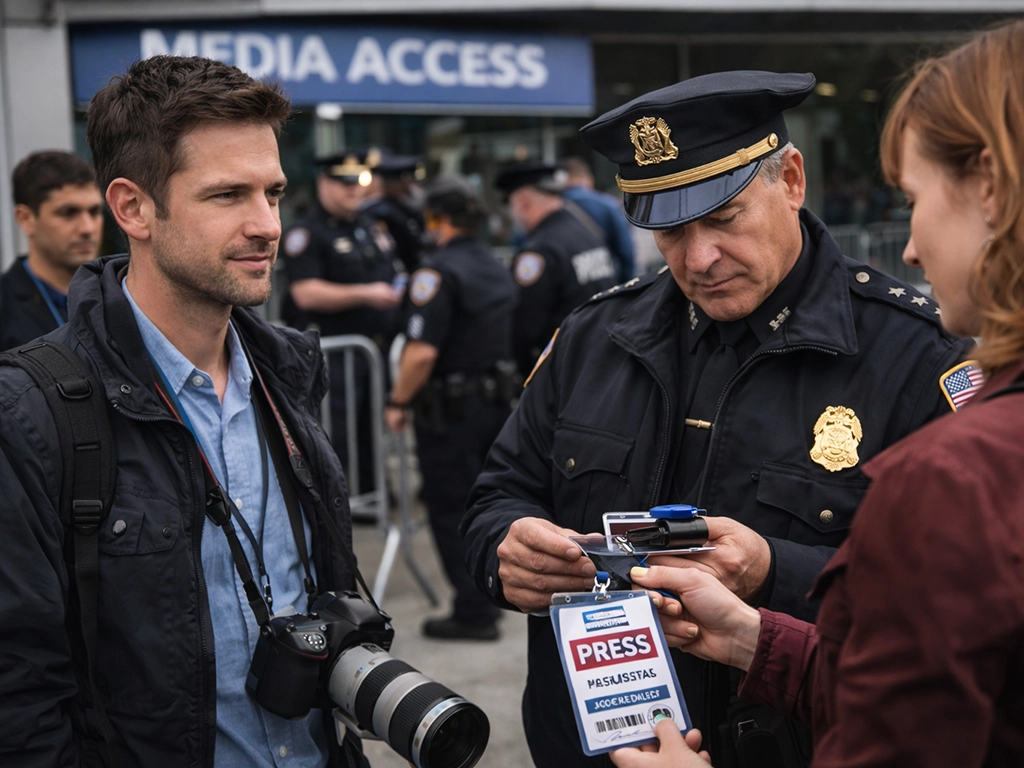
It is important to understand that press credentials are not universal “access passes.” Laws vary by country, state, and institution. A press badge does not override security regulations or private property rights. However, it often serves as a key component in establishing legitimate media interest.
Journalists regularly encounter situations where credentials help clarify their status:
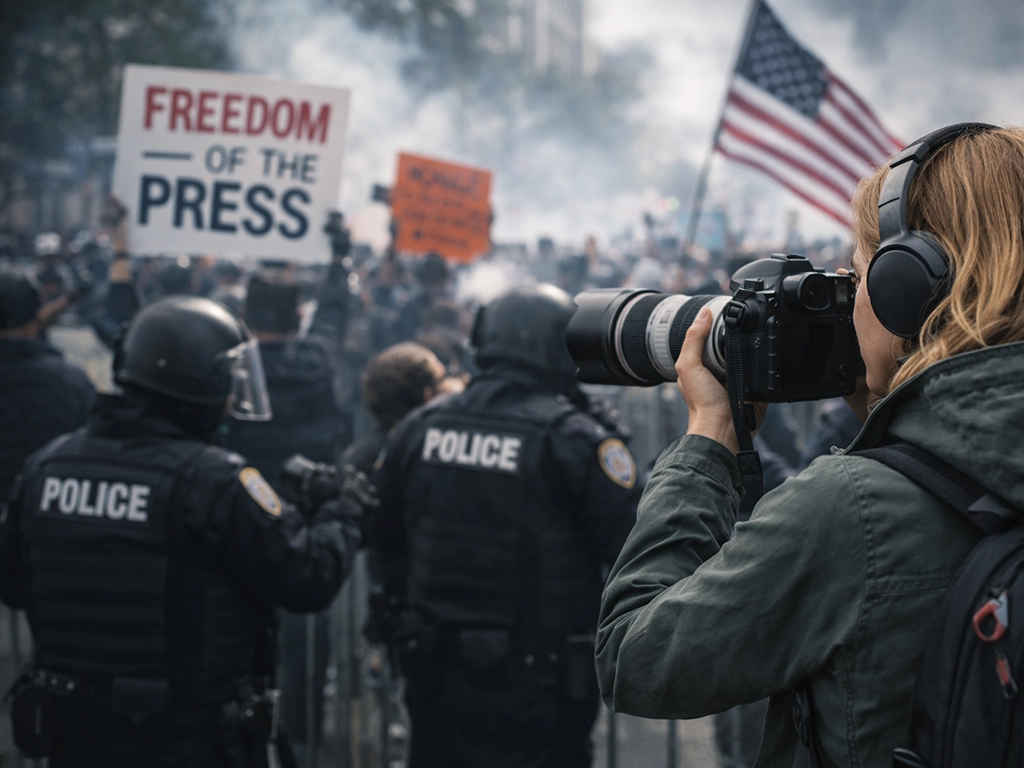
- Public Demonstrations and Political Rallies
Authorities may create designated media zones. Credentials assist law enforcement in distinguishing reporters from participants. - Court Proceedings and Government Briefings
Many institutions require proof of journalistic activity and organizational backing. - Restricted Emergency Areas
During natural disasters or crisis situations, accredited journalists may receive controlled access for documentation purposes.
Press credentials support legal clarity. They help reduce misunderstandings between journalists and authorities, particularly in tense or fast-moving environments. At the same time, they reinforce the principle that journalism operates within legal and ethical boundaries—not outside them.
3. Credibility in an Age of Information Overload
The digital era has democratized content creation. While this development has empowered many voices, it has also blurred distinctions between verified reporting, commentary, activism, and misinformation.
Professional credentials contribute to restoring clarity in several ways:
- Public Trust
Audiences are more likely to trust reporting when it is associated with identifiable, accountable professionals. - Editorial Standards
Recognized journalists typically operate under codes of ethics, fact-checking practices, and professional guidelines. - Transparency
A visible credential signals that the journalist is prepared to stand behind their work.
The credibility crisis facing media organizations globally is not only about political polarization—it is also about verification. Clear professional identification helps differentiate structured journalism from anonymous digital noise.
Organizations such as the United States Press Agency contribute to this clarity by offering structured identification systems for working journalists, freelancers, photographers, and media professionals. Such institutional frameworks reinforce accountability and professional integrity.
4. Freelancers and Independent Journalists: The Growing Importance of Recognition
One of the most significant shifts in the media landscape is the rise of independent journalism. Freelancers now cover international conflicts, investigative stories, cultural events, and local reporting without permanent newsroom affiliation.
For independent professionals, press credentials serve additional purposes:
- Professional Legitimacy
Freelancers often lack the backing of large media corporations. Credentials help demonstrate that they operate within recognized structures. - International Mobility
Cross-border reporting increasingly requires clear documentation of journalistic status. - Security and Identification
In volatile environments, visible press identification can reduce misunderstandings and risks.
In many cases, independent journalists must proactively establish their credibility. Membership in recognized press organizations provides a framework that supports this process without limiting editorial independence.
5. Press Credentials and Ethical Responsibility
Credentials are not merely access tools—they imply responsibility. The presence of a press badge carries expectations:
- adherence to factual accuracy
- respect for privacy and human dignity
- avoidance of conflicts of interest
- responsible conduct in crisis reporting
Professional identification should always align with professional behavior. Misuse of credentials—such as attempting to bypass security without legitimate media purpose—undermines the credibility of the entire profession.
Responsible press organizations emphasize ethical standards alongside identification. The value of a credential increases when it is embedded within a broader culture of accountability and integrity.
6. Digital Credentials and the Future of Verification
As journalism evolves, so do verification systems. Digital credentials, QR-code validation, and secure membership databases are increasingly used to confirm authenticity.
Future developments may include:
- Secure Online Verification Systems
Event organizers can instantly confirm active status. - Integrated Membership Databases
Centralized platforms improve transparency and reduce fraudulent misuse. - Hybrid Identification Models
Physical badges combined with digital authentication tools.
In a media world increasingly influenced by artificial intelligence, deepfakes, and manipulated imagery, professional verification systems will likely play a growing role. The clearer the structures around journalism, the stronger public confidence can become.
7. The Broader Value of Professional Association
Press credentials are most meaningful when supported by a structured professional network. Beyond identification, journalists benefit from:
- Professional Exchange
Networking with peers enhances collaboration and knowledge-sharing. - Resource Access
Legal updates, industry developments, and professional guidance support informed reporting. - Institutional Representation
Organized associations contribute to defending press freedom and professional standards.
The United States Press Agency exemplifies how structured affiliation strengthens individual journalists. By providing recognized credentials within an ethical and professional framework, such organizations contribute to stability in an otherwise fragmented media landscape.
Importantly, this role is not promotional but structural: professional organization enhances transparency, accountability, and trust—three pillars essential for modern journalism.
Conclusion: Professional Identity in a Fragmented Media World
The media landscape of 2026 is more open, faster, and more decentralized than ever before. At the same time, it is more contested, more polarized, and more vulnerable to manipulation.
In such an environment, press credentials serve as anchors of professional identity. They:
- clarify who is operating as a journalist
- facilitate lawful access
- reinforce ethical accountability
- strengthen public trust
They are not symbols of privilege but instruments of responsibility.
As journalism continues to evolve, structured identification and professional affiliation will remain central components of credible reporting. In a world saturated with content, clarity and accountability are not optional—they are foundational.
Professional press credentials, when embedded within ethical and institutional frameworks, remain a vital element of contemporary media practice.