
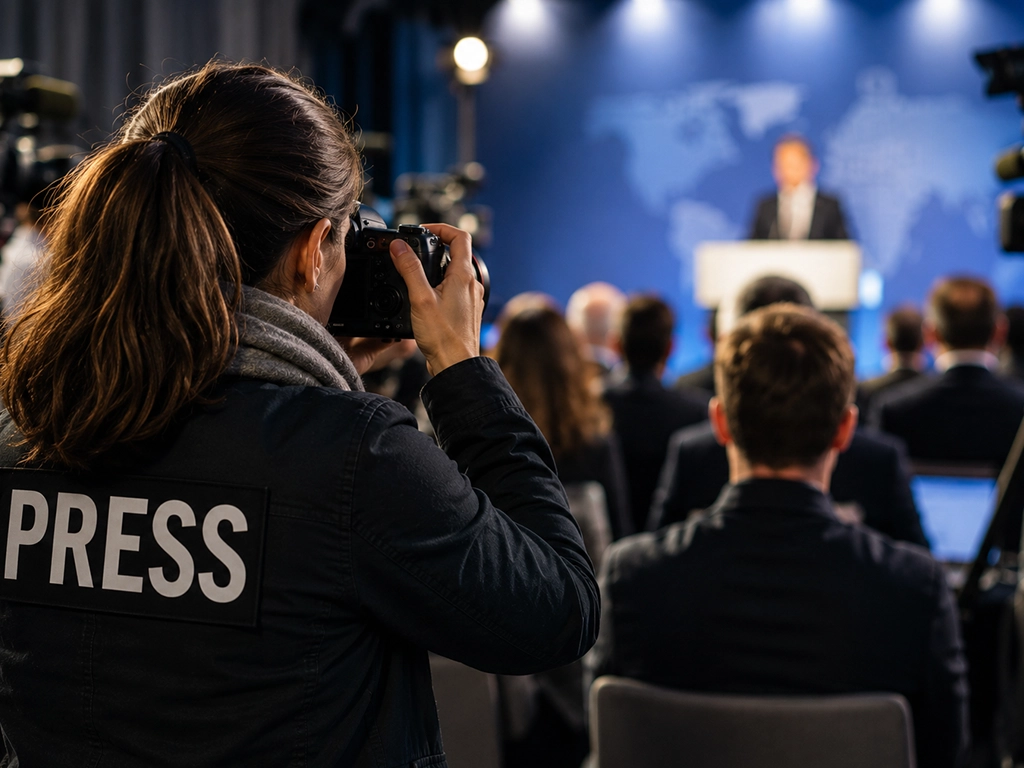
In today’s overcrowded digital media landscape, journalists face increasing challenges in building trust, visibility, and professional recognition. This article explores how reporters and freelance media professionals can strengthen their credibility, establish a clear professional identity, and stand out in a rapidly evolving information environment.
Introduction
The modern media landscape has become more accessible than ever before. Digital platforms, mobile technology, and social media have fundamentally transformed the way information is created, distributed, and consumed. Today, virtually anyone with an internet connection can publish opinions, livestream events, or share breaking news in real time with a global audience.
While this unprecedented accessibility has democratized communication and opened the door for diverse voices, it has also created an increasingly crowded and fragmented media environment. Professional journalists now compete not only with traditional news outlets, but also with influencers, content creators, bloggers, anonymous accounts, and algorithm-driven information streams.
In this environment, visibility alone is no longer enough. Journalists must build a professional identity that communicates credibility, transparency, expertise, and accountability. Audiences, institutions, and interview partners increasingly seek clear signals that distinguish professional journalism from unverified content or purely opinion-driven communication.
For freelance reporters, independent photographers, and digital journalists in particular, this challenge has become central to long-term success. Building a professional identity is no longer optional—it is an essential part of modern journalistic work.
A strong professional identity helps journalists gain trust, improve access to information, strengthen networking opportunities, and position themselves more effectively within a highly competitive media ecosystem.
1. Journalism in a Saturated Information Environment
The sheer volume of content published every day has fundamentally altered public perception of journalism. News competes for attention across thousands of websites, social media feeds, podcasts, streaming platforms, and independent media channels.
This saturation has produced both opportunities and risks.
On one hand, journalists can now reach audiences directly without relying entirely on traditional editorial structures. On the other hand, audiences are increasingly overwhelmed by conflicting information, sensational headlines, and unreliable sources.
The speed at which information circulates has also changed audience expectations. Readers often expect immediate updates, live reactions, and constant coverage. This pressure can make it difficult for journalists to maintain the careful verification processes that are essential for responsible reporting.
At the same time, digital platforms have created an environment where visibility is often determined by algorithms rather than editorial quality. Content that generates strong emotional reactions or rapid engagement may receive greater exposure, regardless of accuracy or journalistic value. As a result, professional journalism must compete not only for attention, but also for trust.
For journalists, this means that professional identity has become part of the reporting process itself. Readers no longer evaluate only the story—they also evaluate the credibility of the person behind it.
Key characteristics of today’s media environment:
- Constant information flow
News cycles operate around the clock with minimal delay. - Lower barriers to publication
Individuals can distribute content globally within seconds. - Algorithm-driven visibility
Social media platforms strongly influence which stories gain attention. - Growing distrust in media
Audiences often question the reliability and motivations behind published content.
Another important development is the growing overlap between journalism, entertainment, and personal branding. Many media personalities now operate simultaneously as reporters, commentators, influencers, and public figures. While this can increase reach, it may also blur professional boundaries and make it harder for audiences to distinguish between factual reporting and opinion-driven content.
In such an environment, journalists who communicate professionalism clearly and consistently are more likely to stand out. A structured professional identity helps audiences understand that the journalist operates according to established standards rather than purely algorithmic or commercial motivations.
Ultimately, the challenge is no longer simply publishing information—it is maintaining credibility and professional clarity within a constantly evolving and overcrowded digital ecosystem.

2. Why Professional Identity Matters More Than Ever
In traditional journalism, professional legitimacy was often automatically linked to established media organizations. Today, journalists must actively establish and communicate their identity across multiple platforms and professional interactions.
This includes:
- websites and portfolios
- social media profiles
- published articles and reports
- affiliations and credentials
- networking and public presence
Professional identity is not simply about personal branding. It is about creating clarity and trust in an environment where audiences are constantly evaluating sources of information.
A journalist with a clearly structured and transparent professional profile is more likely to:
- gain access to interviews and events
- receive responses from institutions
- build long-term audience trust
- establish professional collaborations
- strengthen credibility in sensitive reporting situations
In many cases, first impressions determine whether a journalist is perceived as legitimate. A well-maintained profile, visible affiliations, and professional credentials can significantly influence how others respond.
This is particularly important for freelance journalists, who often operate without the immediate recognition associated with major news organizations.
3. Visibility vs. Credibility: Finding the Right Balance
One of the greatest challenges in modern journalism is balancing visibility with credibility. Social media platforms reward speed, emotion, and constant engagement, while professional journalism requires verification, context, and responsibility.
This creates tension between attention-driven media dynamics and journalistic standards.
Common risks in overcrowded media environments:
- prioritizing speed over accuracy
- sensationalizing headlines for visibility
- blending journalism with personal activism
- losing transparency regarding sources or affiliations
Journalists who focus exclusively on visibility may achieve short-term reach, but they risk damaging long-term trust. Conversely, journalists who maintain professional standards and communicate clearly are more likely to build sustainable credibility.
Professional identity therefore requires strategic consistency. Journalists must not only produce quality content—they must also demonstrate professionalism through their communication, presentation, and conduct.
This includes using clear identification methods and recognized structures that help audiences and institutions understand who the journalist is and how they operate professionally.
4. The Role of Press Credentials and Accreditation
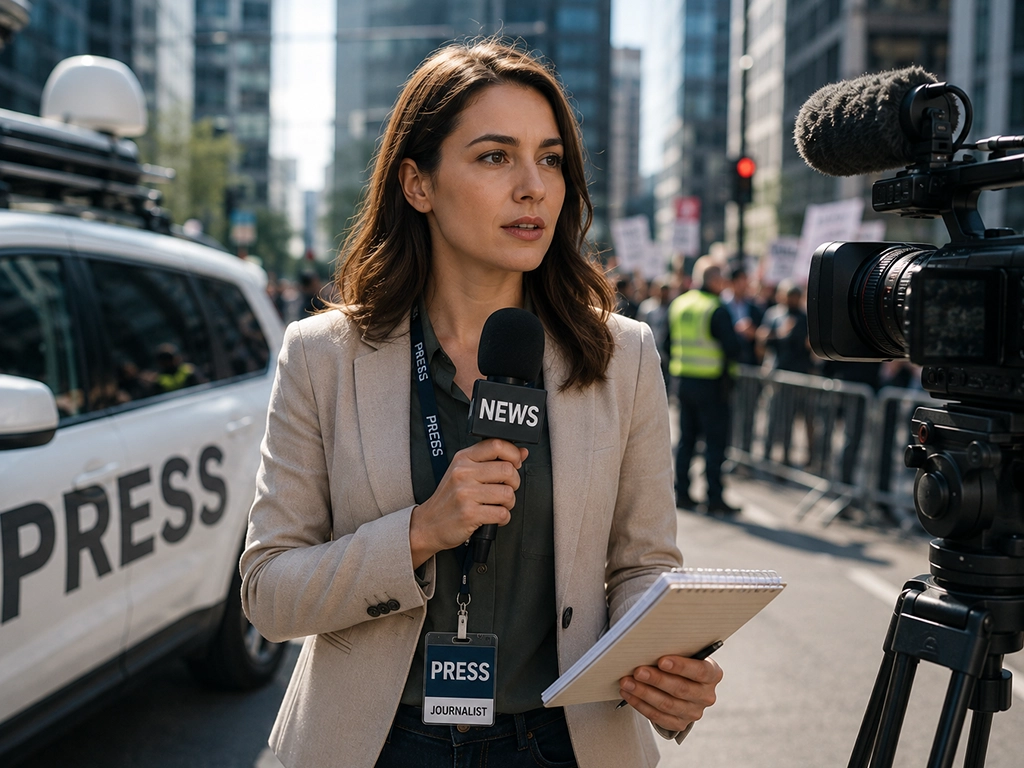
Professional press credentials remain one of the most important tools for establishing legitimacy in modern journalism. In an increasingly crowded media world, clear identification helps distinguish professional journalists from casual content creators or anonymous online actors.
Press credentials support journalists in practical and professional situations, including:
- covering public events
- requesting interviews
- accessing restricted media areas
- documenting official proceedings
- communicating with authorities and institutions
Information about obtaining professional credentials can be found here:
https://www.unitedstatespressagency.com/en/applying-for-a-press-pass.html
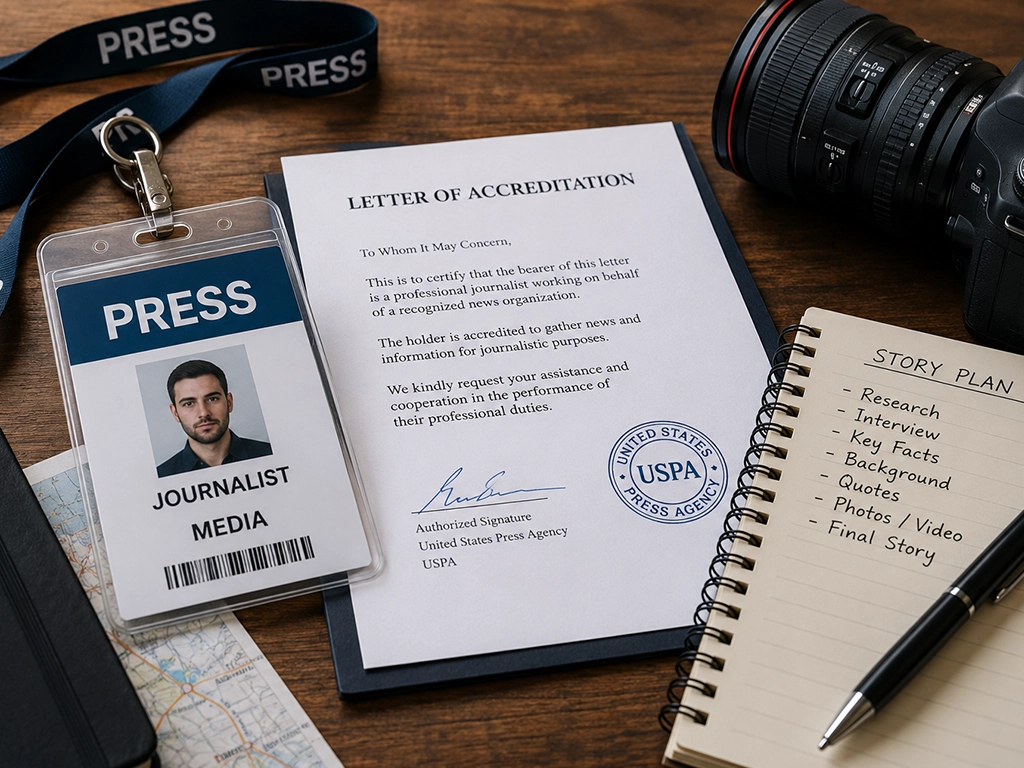
In addition to standard press credentials, formal accreditation letters can further strengthen professional legitimacy during official assignments or international reporting situations.
For example:
https://www.unitedstatespressagency.com/en/letter-of-accreditation.html
In many real-world situations, journalists must quickly establish who they are and why they are present. This is especially important during political events, public demonstrations, conferences, or emergency situations where security personnel and authorities require immediate verification of media status.
Professional accreditation therefore serves both a practical and symbolic purpose. Practically, it facilitates communication and reduces uncertainty during assignments. Symbolically, it signals that the journalist operates within a recognized professional framework and adheres to accepted journalistic standards.
For freelance journalists, accreditation can be particularly valuable. Without the backing of a major newsroom, independent reporters often rely on professional credentials to establish trust and legitimacy during interactions with institutions and event organizers.
Moreover, international reporting increasingly requires clear documentation of journalistic activity. Journalists working across borders may encounter varying legal requirements, security procedures, or accreditation systems. In these contexts, structured professional identification becomes even more important.
Another key aspect is transparency. In a media environment where misinformation and impersonation have become growing concerns, verified credentials help audiences and institutions distinguish professional journalism from unverified online activity.
Professional identity is reinforced when journalists can combine visible credentials with consistent ethical and editorial standards. Credentials alone are not enough—they must be supported by responsible reporting, accountability, and professional conduct.
5. Building Recognition Through Consistency and Structure
Professional recognition is rarely achieved through a single successful report or viral moment. Instead, it develops gradually through consistent work and structured presentation.
Journalists who are recognized as professionals typically demonstrate:
- regular publication activity
- clear thematic focus
- ethical reporting practices
- transparent communication
- professional presentation across platforms
Consistency is particularly important in digital journalism. Audiences are more likely to trust journalists whose work reflects stable quality and recognizable standards over time.
Building recognition also requires patience. In an environment dominated by rapid trends and short attention spans, many journalists feel pressure to constantly pursue visibility. However, sustainable professional recognition is usually built through long-term reliability rather than temporary exposure.
Readers, institutions, and professional partners tend to value journalists who demonstrate continuity in both content and conduct. A journalist who consistently produces accurate and responsible reporting gradually establishes a reputation that becomes an important professional asset.
Important elements of long-term professional positioning:
- Specialization
Expertise in a specific field improves authority and visibility. - Transparency
Open communication regarding identity and methods strengthens trust. - Reliability
Consistent publication and responsible reporting improve credibility. - Professional infrastructure
Recognized affiliations and verification mechanisms reinforce legitimacy.
Another important factor is adaptability. Journalism continues to evolve rapidly, and journalists must be willing to develop new skills and adjust to changing technologies. Multimedia reporting, digital publishing strategies, and audience interaction have become increasingly important components of professional journalism.
At the same time, adaptability should not come at the expense of professional standards. Journalists who successfully balance innovation with credibility are better positioned to maintain long-term relevance in a competitive media landscape.
Professional structure also reduces uncertainty. Clear profiles, organized portfolios, professional affiliations, and transparent communication create a more stable and trustworthy presence. This helps journalists navigate an environment where audiences are constantly evaluating the credibility of information sources.
Journalists who build this structure around their work are better positioned to stand out in a crowded media environment without relying on sensationalism or algorithm-driven trends. Ultimately, recognition is built through a combination of visibility, professionalism, consistency, and trust.
6. Expanding Professional Opportunities
A strong professional identity not only improves credibility—it also expands opportunities.
Journalists who are perceived as trustworthy professionals are more likely to:
- receive invitations to media events
- gain interview access
- establish partnerships and collaborations
- attract larger audiences
- develop sustainable careers
Professional infrastructure also plays an important role in operational efficiency.
For example, specialized tools such as press vehicle identification can support journalists working in the field or covering events requiring clear media designation.
Additional information can be found here:
https://www.unitedstatespressagency.com/en/press-vehicle-id.html
Likewise, publishing within recognized media environments helps journalists strengthen visibility while maintaining professional standards.
The: https://www.unitedstatespressagency.com/en/uspa-news.html
platform provides journalists with a structured environment for publishing and presenting journalistic work within a broader professional media context.
For independent journalists especially, this combination of visibility and structure can significantly improve long-term positioning.
7. Professional Networks and Community
Journalism has always relied on networks. Even in an increasingly digital environment, professional relationships remain essential for career development, information exchange, and collaboration.
Freelancers often face challenges related to isolation and limited institutional support. Professional communities help address these issues by creating opportunities for exchange and cooperation.
Benefits of professional journalistic networks:
- sharing experiences and expertise
- collaborative reporting opportunities
- improved access to information
- increased visibility within the industry
- stronger professional support structures
Being part of a recognized journalistic environment also reinforces accountability and professionalism. It signals that the journalist operates within a broader framework of ethical and professional standards.
For journalists seeking to formalize and strengthen their professional presence, registration opportunities are available here:
https://www.unitedstatespressagency.com/en/register-now.html
Professional communities do not replace independent work—they strengthen and support it.
Conclusion: Professional Identity as the Foundation of Modern Journalism
The modern media landscape offers enormous opportunities for journalists to reach audiences, share stories, and build independent careers. At the same time, the overcrowded nature of today’s information environment makes professional identity more important than ever before.
Journalists must do more than publish content. They must communicate credibility, transparency, and accountability in every aspect of their work.
Building a professional identity requires consistency, ethical standards, clear communication, and structured recognition. It is not about self-promotion alone—it is about creating trust in a fragmented and often uncertain media ecosystem.
Organizations and professional structures that support identification, accreditation, networking, and publication play an increasingly important role in helping journalists establish themselves within this environment.
Ultimately, journalists who successfully balance visibility with professionalism are best positioned to build sustainable careers and contribute meaningfully to a trustworthy and responsible media landscape.