
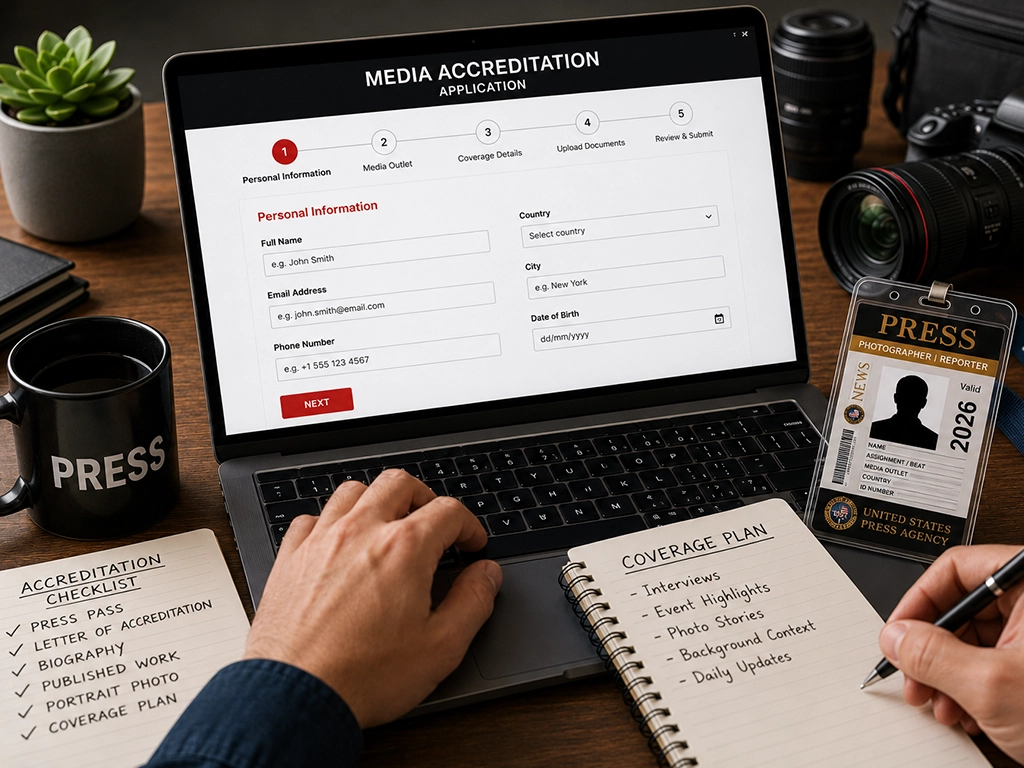
A festival photo pit, a sold-out concert, the media area of a major trade show – the best stories happen in places the general public cannot reach. Getting there has little to do with luck and everything to do with a process that most independent journalists were never taught. This step-by-step guide explains how event accreditation actually works, which documents organizers expect, when to apply, and how to write a request that gets approved rather than ignored.
Access Is a Process, Not a Favor
Many independent journalists believe that access to major events is decided by connections, reputation, or sheer persistence. In reality, accreditation is an administrative process with clear rules, predictable deadlines, and a small number of documents that organizers need in order to say yes. Once you understand that process, the mystery disappears and the doors start opening.
It helps to see the situation from the other side of the desk. A press office at a large festival may receive several hundred accreditation requests for a limited number of passes. The people reviewing them are not looking for reasons to reject you; they are looking for confidence. They need to know that you are a working member of the media, that your reporting will actually be published somewhere, and that you will behave professionally in restricted areas alongside artists, exhibitors, staff, and the public.
Almost every rejected application fails on one of those three points, not on talent. A photographer with an outstanding portfolio will be turned away if the request arrives two days before the event with no verifiable credentials and no indication of where the pictures will appear. A less experienced reporter with proper documents, a clear outlet, and a punctual, professional request will be approved. Accreditation rewards preparation, and preparation is entirely within your control.
What Organizers Are Actually Asking For
Every accreditation form, however it is worded, is trying to answer the same underlying questions. Who are you? Can that be verified independently? For whom are you reporting? And what exactly do you intend to produce? Read in that light, the paperwork stops feeling arbitrary and starts looking like a simple checklist.
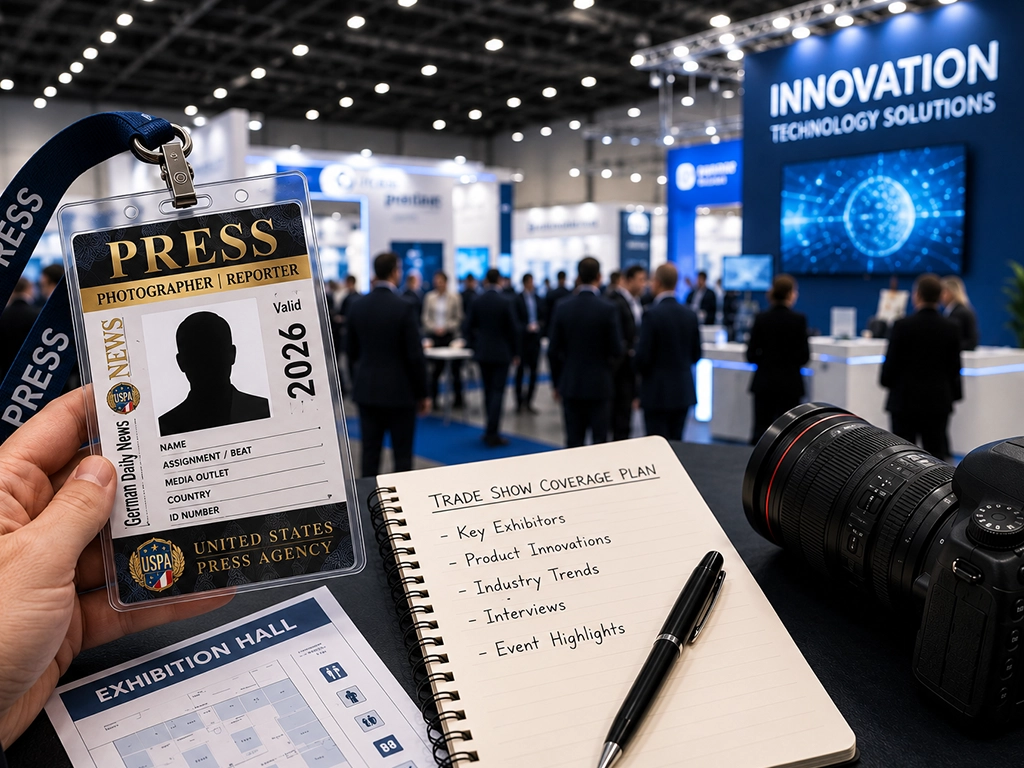
Proof of professional status comes first. An internationally recognized press pass answers the identity question immediately and is the foundation everything else rests on. Because the modern media landscape includes freelancers, bloggers, videographers, and part-time contributors, credentials that reflect this reality matter; the USPA press pass is issued to full-time and part-time journalists alike, which is precisely the group most often excluded elsewhere.
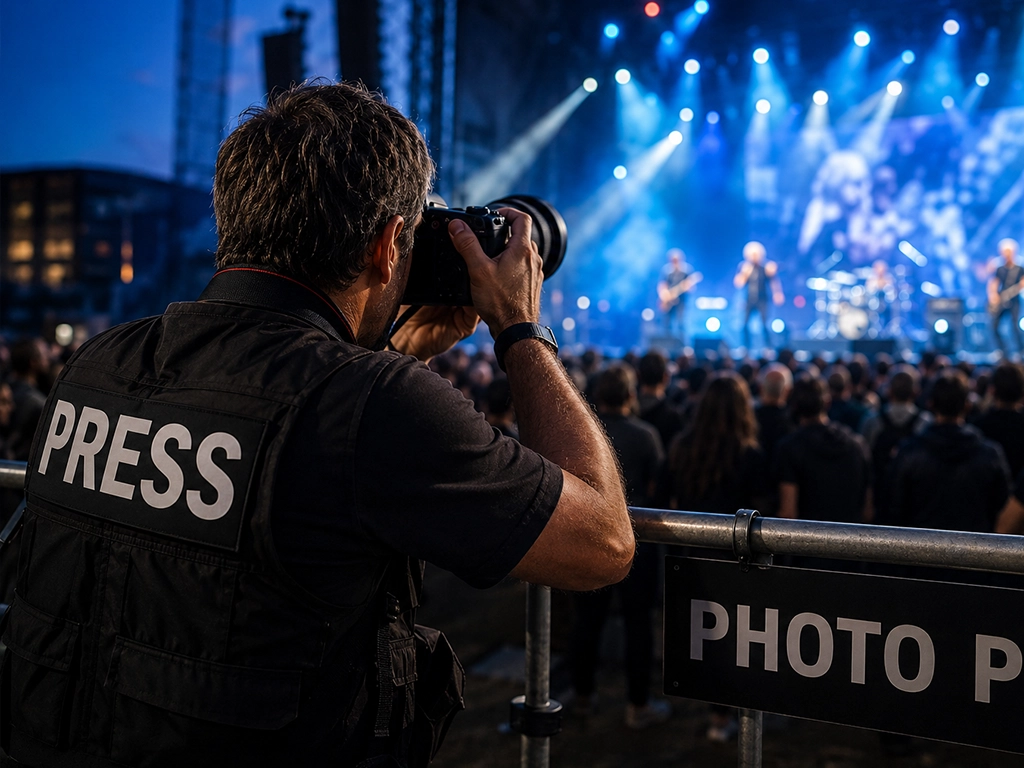
It also pays to know that not all passes are equal. Large events commonly distinguish between a general media pass, which grants entry and access to the press area, and a photo pass, which additionally permits work in the pit or from designated positions. Trade shows may separate press badges from exhibitor and analyst credentials entirely. Applying for the wrong category is a common and avoidable mistake: a reporter with a media pass who expected to shoot from the front rail will spend the day frustrated. Read the categories carefully before you choose one, and if the distinction is unclear, ask the press office rather than guess.
The second question – for whom are you reporting? – is where most independent applications collapse. Organizers today rarely accept membership in an association as an answer. They want to know the agency, outlet, or publication behind your work, and they want to see that the coverage has a home. This is not a bureaucratic whim: a media pass is granted in exchange for expected coverage, and the press office needs to know what it is exchanging it for.
Assembling Your Documents Before You Apply
Nothing wastes an opportunity faster than discovering, on the day a deadline closes, that a required document takes a week to obtain. Serious applicants keep a standing accreditation folder and update it once a year, so that any request can be submitted within minutes rather than days.
A complete folder for most events contains:
- A valid press pass, current for the year in question.
- A letter of accreditation or assignment naming your outlet and your area of coverage.
- A short professional biography, roughly one paragraph, written in the third person.
- Links to recent published work, ideally in the same field as the event.
- A high-resolution portrait photograph and your basic contact and ID details.
- A brief description of the coverage you intend to produce.
The single most decisive item on that list is usually the accreditation letter. It confirms in writing, on letterhead, that you are working as a journalist within a defined beat, and it turns an individual request into a documented assignment. USPA members receive a letter of accreditation in their own name as part of membership, tied to the beat they registered for – which is exactly the connection between reporter and subject matter that press offices are trying to establish.
Timing: The Deadline Is the Real Filter
If there is one factor that decides more applications than any other, it is timing. Accreditation windows open and close far earlier than most newcomers expect, and once a list is closed it is genuinely closed, regardless of how good your work is.
As a rough guide, large trade shows and international conferences typically open media registration two to four months in advance and confirm well before the doors open. Music festivals often close their photo lists four to eight weeks ahead, sometimes earlier for headline stages. Individual concerts run on a much shorter cycle, frequently one to three weeks, and are usually handled by the promoter’s PR agency rather than the venue. Sporting events vary enormously, with the largest fixtures accrediting months in advance.
The practical lesson is to work backwards from the event and to apply as early as the process allows. Early applications are read carefully by people who still have passes to allocate; late ones land in an inbox that is already full. Building a simple calendar of the events that matter to your beat, with their accreditation windows marked, is one of the least glamorous and most effective habits a working journalist can develop.
Writing a Request That Gets Approved
When the process runs through a form, fill it in completely and precisely – incomplete forms are the easiest ones to discard. When it runs through email, the message itself becomes your application, and its quality matters more than most applicants realize.
Before writing anything, make sure it will reach the right desk. Festivals and trade shows almost always publish a dedicated accreditation page or media portal, and using it is not optional – requests sent to a general contact address are routinely lost. Individual concerts are different: the venue rarely decides, and the promoter or the artist’s PR agency does. Ten minutes spent identifying the correct contact will do more for your chances than any amount of persuasive writing sent to the wrong inbox.
A strong request is short, specific, and professional. Name the event and the exact dates in the subject line. Introduce yourself in one sentence, state your outlet, and say plainly what you intend to produce: a photo report, an interview, a preview, a review. Attach or link your credentials rather than describing them. Then stop. Press officers read dozens of these a day and reward clarity; long, personal, or pleading messages achieve the opposite of their intention.
Two details lift a request above the pile. The first is evidence that you know the event – referring to a specific stage, exhibitor, hall, or artist shows you are planning coverage rather than collecting passes. The second is a clear commitment about publication. If your assignment relates to a specific event, USPA members can also request documentation for that occasion through the agency’s press accreditation service, which gives the press office a concrete, verifiable basis for the request instead of a general statement of intent.
Finally, expect silence and plan for it. A polite follow-up roughly a week later, referencing your original message, is normal and often effective. Two follow-ups are not.
Verification: Why Credibility Beats Enthusiasm
Behind every accreditation decision sits a quiet verification step. Press offices at major events have learned to be careful: fake and altered press credentials circulate, and a wrongly issued pass can put an organizer in a difficult position with artists, exhibitors, or security. Anything that cannot be checked is treated with suspicion.
This is why credentials issued by a recognized agency carry weight that a self-printed card or a personal website never will. A genuine press pass includes security features and can be authenticated by the issuing agency on request, which allows organizers and businesses to verify that a press pass is legitimate rather than take an applicant’s word for it. From the press office’s perspective, verifiability is not a formality – it is the whole point.
The same logic explains why enthusiasm alone never persuades anyone. Telling an organizer how much you love their festival is not an argument; giving them a checkable identity, a named outlet, and a documented assignment is. Credibility is what makes a yes easy, and it is built long before the application is written.
On Site: Turning One Pass Into the Next One
Accreditation is not a single transaction but the beginning of a relationship. How you conduct yourself on the day determines whether next year’s application is approved automatically or reconsidered from scratch, and press offices have long memories.
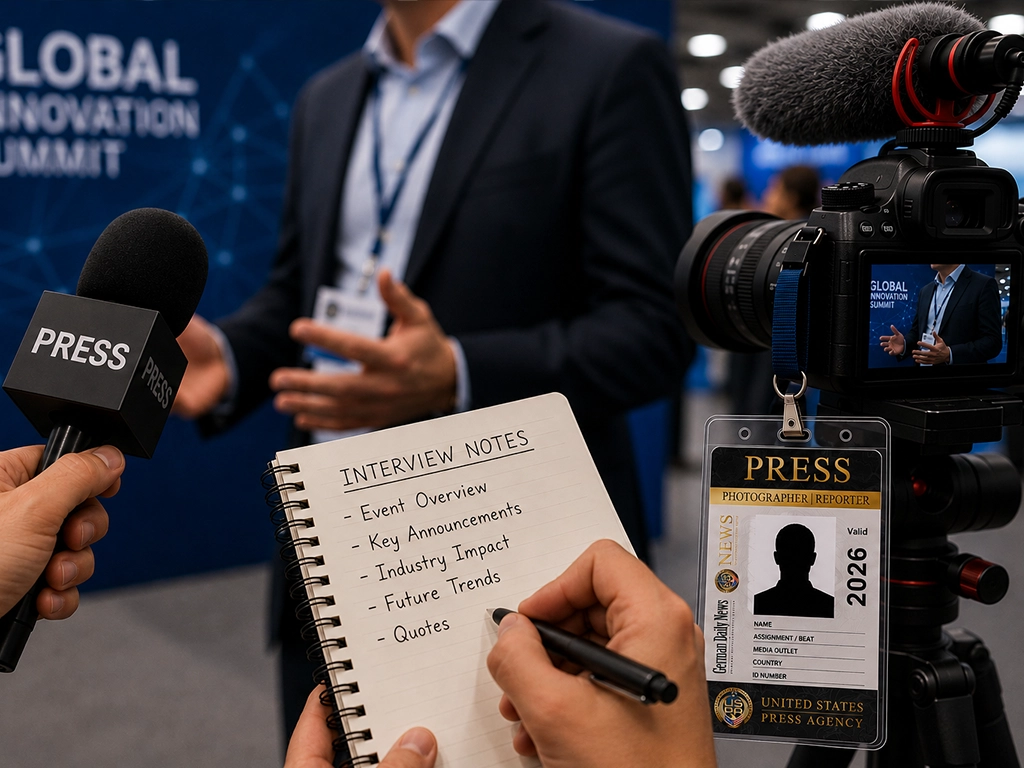
Collect your pass early rather than at the last minute, and read the rules attached to it – they are not decoration. Photo pits usually operate on a strict limit, commonly the first three songs and no flash. Trade shows often place embargoes on announcements and restrict filming at certain stands. Restricted areas mean exactly what they say. Wear your credential visibly, follow the instructions of stewards without argument, and stay out of the way of the event itself. Every professional habit you display is noted, if only unconsciously.
Rejection deserves the same professionalism. A declined request is usually a capacity decision rather than a verdict on your work, and the way you answer it is remembered. A brief, gracious reply asking to be considered for a future edition costs nothing and occasionally produces a late cancellation pass; an indignant one guarantees that your name is recalled for the wrong reason. Many long-standing accreditations began with a no that was handled well.
The most valuable step is also the most frequently skipped: send your published coverage to the press office afterwards. A short message with a link closes the loop, proves that the pass produced what it was granted for, and puts your name on the short list of people whose next request needs no debate. Journalists who do this consistently stop applying for access and start being invited to it.
From Access to a Professional Track Record
Read as a whole, the accreditation process is far less mysterious than its reputation suggests. Verifiable credentials, a documented assignment, an early and precise request, and professional conduct on site are the four things that decide almost every application. None of them requires fame or connections; all of them require preparation.
What they do require is a professional foundation to stand on. A press pass that organizers recognize, an accreditation letter that ties you to your beat, event documentation when a specific occasion demands it, and a publishing outlet that gives your coverage a home together close the gap that stops so many capable independent journalists at the barrier. Each successful accreditation then builds the record that makes the next one easier, which is how a career in the field is actually constructed – one documented assignment at a time.
If you are already producing work worth publishing and want the credentials that open these doors, the practical next step is to put your professional status on paper. You can do that by applying for a USPA press pass and joining an international community of accredited media professionals. The events are already scheduled. The only real question is whether your paperwork is ready before the deadline is.